
Why don't your customers come back to buy, and how can you prevent it?
A commercial relationship doesn't end with the first sale. It also depends on what happens next.
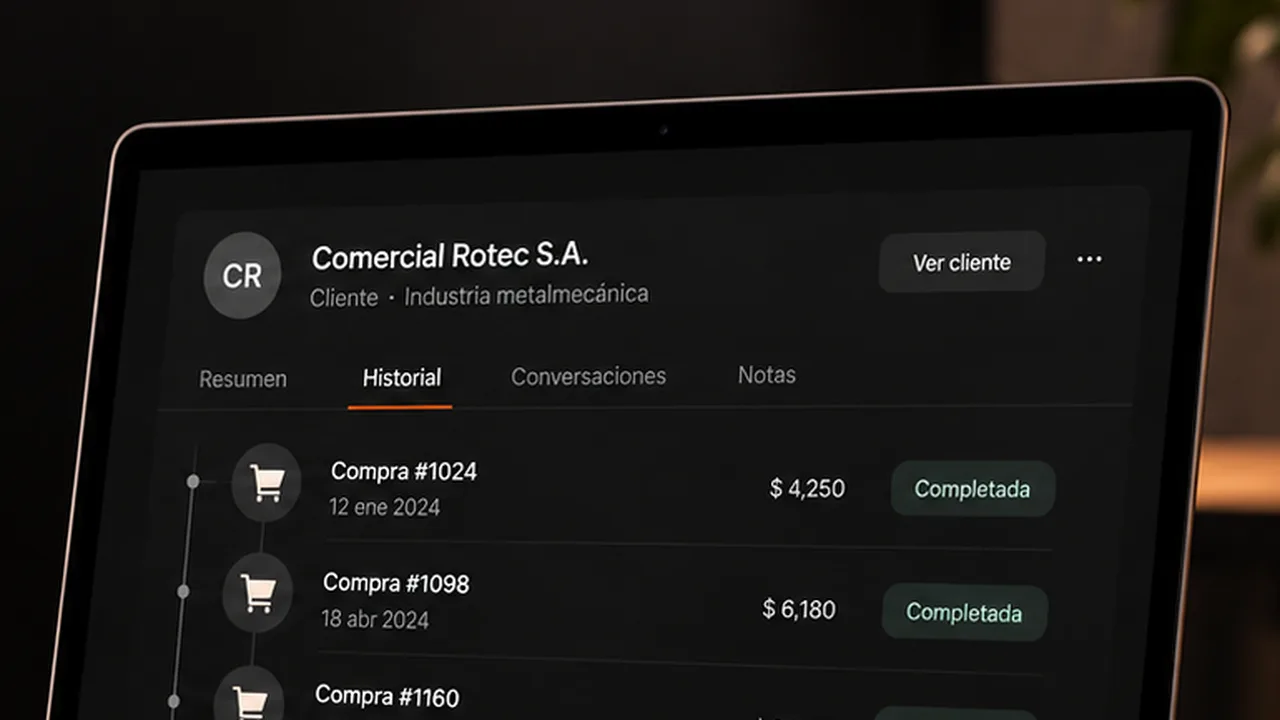
A B2B customer usually stops buying because of a lack of follow-up, slow responses, complicated reorder processes, poor commercial visibility or changing needs. To prevent it, learn their buying habits, follow up after each sale, make recurring orders easier and respond on time.
Winning a customer matters, but getting them to buy again is also part of growth. A customer can receive their product on time and still go months without placing an order. In many cases, the company doesn't notice the absence until too much time has passed.
Why does a customer stop buying?
It's common to assume they found a better price. That's possible, but it doesn't always explain what happened. In B2B sales, especially industrial distribution, other factors play a role:
- Lack of follow-up: after the sale, the team stops staying in touch.
- Slow responses: the customer asks for information or a new quote and doesn't get it when needed.
- Complicated processes: reordering means repeating information or waiting too long.
- Poor commercial visibility: the company doesn't know how long it's been since the last purchase.
- Changing needs: the products, quantities or conditions they needed may have changed.
Not all of these mean the customer is unhappy, but without a process to identify them, it's hard to act in time.
The problem isn't always losing customers, it's not noticing
Imagine a company that distributes industrial components. A regular customer orders every month and then one day stops sending requests. The team keeps handling new quotes, and nobody notices it's been more than two months without contact.
That doesn't mean every absence is a lost sale. Some customers have irregular cycles, temporary projects or seasonal needs. The goal is to identify when their usual behavior changes.
How can you keep customers from leaving?
Learn their buying habits
Identify what each customer buys, how often and when they last bought. That lets you distinguish someone who orders weekly from someone who only buys when a project starts.
Follow up after closing a sale
Staying in touch surfaces new needs and resolves questions. One message can be enough: "We noticed it's been a while since your last order. Do you need to update a quote or check availability?" The goal is to make communication easy, not to apply pressure.
Make recurring purchases easier
A regular customer shouldn't start from zero every time. Having products, specifications, past quotes and terms organized helps the team respond with more context.
Shorten response times
If a customer reorders a product or asks about inventory, a timely response keeps the conversation alive. This matters especially when availability and technical characteristics influence the decision.
What role does artificial intelligence play in retention?
As a company grows, following up on every conversation becomes a challenge. An AI solution connected to the right commercial information can help handle requests from new and repeat customers, make product and availability questions easier, reduce manual quoting work and give more visibility into what's pending.
It's important to distinguish between serving customers better and predicting who will stop buying. Identifying churn risk requires analyzing historical data and setting specific criteria, and AI's effectiveness depends on data quality and connected tools.
How does Peaking help keep opportunities active?
Peaking helps automate commercial activities, supporting conversations, access to product information and quote generation. Its connection to your channels and ERP lets the team work with commercial information inside the service flow, and its campaigns let you segment customers who stopped buying.
Technology doesn't replace the commercial relationship. It gives the team better conditions to maintain it.
What should you measure to know whether you're retaining customers?
| Indicator | What it tells you |
|---|---|
| Purchase frequency | How often a customer orders and whether that changed |
| Time since last purchase | Whether a monthly customer has gone several months without ordering |
| Repeat purchase rate | What share of customers buy again in a period |
| Quotes without follow-up | Requests that could reveal unmet needs |
| Response times | How quickly commercial inquiries are handled |
The goal isn't only knowing how much you sold, but understanding what's happening with the customers who already trusted your company.
Frequently asked questions
Why does a B2B customer stop buying?
The most common causes are lack of follow-up, slow responses, complicated reorder processes, poor commercial visibility and changing needs. Price or competition are possible, but they don't explain every case.
How do you measure customer retention?
Review purchase frequency, time since the last purchase, repeat purchase rate, quotes without follow-up and response times, comparing them against each customer's usual behavior.
How do you reconnect with a customer without pressuring them?
With a clear reason: mention the time since their last order and offer to update a quote or check availability. The goal is to make communication easy, not to push for a sale.
You've got this.
Book a demo and see what this article describes, on your own catalog.