
How to spot when a customer is buying less, before it's too late
A customer doesn't always warn you before they stop buying. Sometimes the first sign is simply that they stop writing.
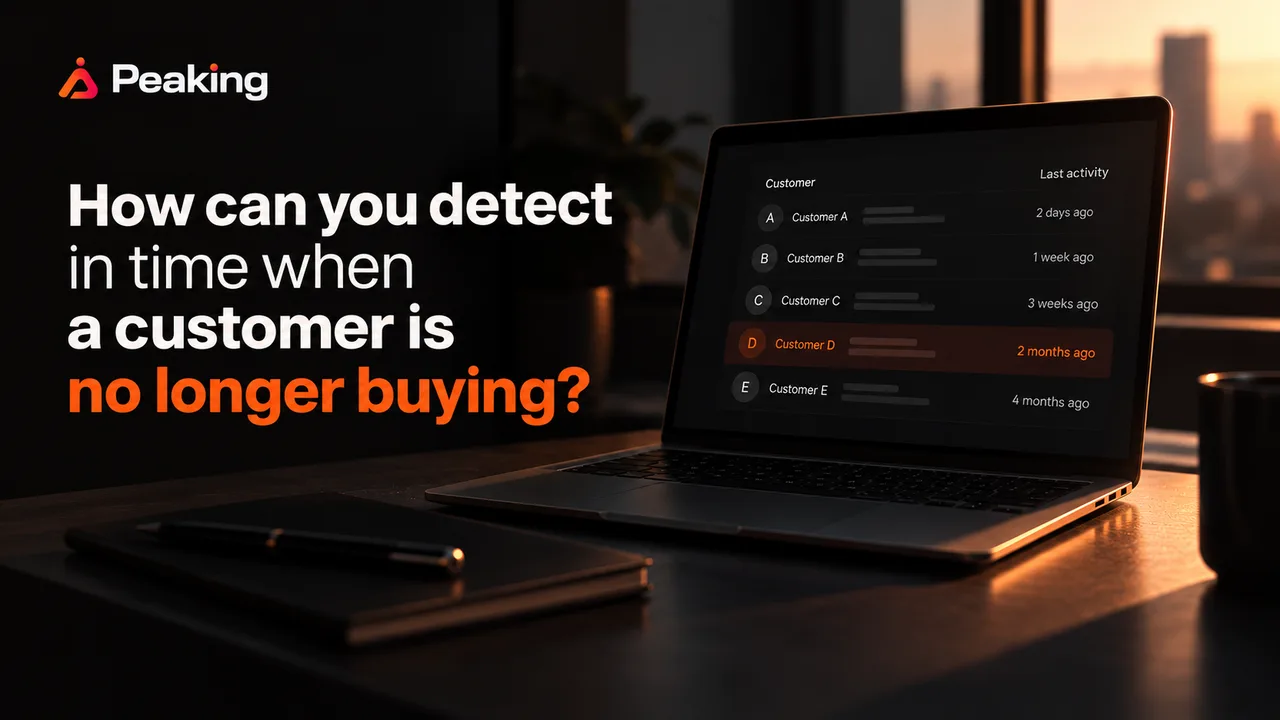
To spot a customer who is buying less in time, watch four signals: lower purchase frequency, quotes without follow-up, less interaction with the team and increasingly smaller orders. Then compare them with that customer's usual pattern and define when the account should be reviewed.
In B2B sales, maintaining a commercial relationship also means recognizing when a frequent buyer reduces their activity, delays orders or stops requesting quotes. When the team focuses on new requests and closed orders, it can overlook customers who have gradually stopped buying.
The absence of a purchase is also information
Imagine an industrial distributor with a customer who orders on a recurring basis. First they stop asking for quotes as often. Then they take longer to respond, and finally several weeks go by without a word. There's no complaint, no cancellation and no message saying the relationship is over.
This can go unnoticed if the company only reviews how much it sold during the month, without analyzing how its customers' behavior has changed.
What signs indicate a customer is buying less?
Lower purchase frequency
A customer who ordered every two weeks starts buying once a month or lets their usual reorder period go by. The change may indicate a shift in their needs, budget or suppliers.
Quotes that receive no follow-up
The customer receives a quote and never responds. If no one picks the conversation back up, it's hard to know whether they postponed the purchase, found an alternative or needed more information.
Less interaction with the sales team
A buyer who used to ask about prices, stock or specifications stops communicating. This is especially relevant for customers with consistent activity.
Increasingly smaller orders
The customer keeps buying, but at a lower volume. It may reflect changes in their operation, or that they're buying part of their products from another supplier.
The important thing isn't to read every change as a loss, but to recognize when it's worth investigating what's happening.
Why do companies detect these signals too late?
In many operations, information is scattered: conversations in messaging apps, quotes in documents or internal systems and orders in the ERP. Each tool holds part of the process, and follow-up ends up depending on each rep's memory. If someone manages dozens of accounts, manually identifying who stopped ordering gets complicated.
Reports also tend to focus on closed orders, sales, quotes generated and top products. Those are important metrics, but they don't show which customers reduced their activity.
What doesn't become a sale also deserves attention.
How can you detect customers buying less, in time?
- Identify purchase patterns. Some customers buy weekly; others monthly or only when a specific need arises. Knowing the pattern tells you when a gap is unusual.
- Review pending quotes. If the customer doesn't respond, check whether they received everything, whether questions remain or whether they need an alternative.
- Analyze commercial activity, not just sales. Review inquiries received, requests handled and conversations that didn't move forward.
- Set follow-up criteria. If a customer usually buys every 30 days, an absence considerably longer than that may justify reaching out.
The goal isn't to push constantly, but to have a clear reason to reconnect.
How can artificial intelligence help with sales follow-up?
When a company manages many customers, products and requests, reviewing all the activity by hand takes time. Artificial intelligence can reduce that work by organizing commercial information, making conversation history easier to look up and supporting request handling.
At Peaking we build technology for distributors that need to manage sales conversations, look up product information and speed up quoting. With organized information, teams have more context when following up.
Automatically identifying customers with lower purchase frequency, however, requires analyzing order history and defining specific rules or mechanisms. It shouldn't be confused with automating responses or quotes.
Keep readingWhy your customers don't come back to buy, and how to prevent it.
Recovering a conversation can be as important as starting a new one
Your own customer base may hold opportunities nobody is addressing. A customer who stopped buying might need updated pricing, availability information, an alternative or simply someone to reach back out. Not every absence is a recoverable sale, but investigating the causes lets you decide with better information.
A commercial opportunity isn't always lost when the customer says no. Sometimes it's lost when no one notices they stopped asking.
Frequently asked questions
What are the signs a customer is about to stop buying?
Lower purchase frequency, quotes without follow-up, less interaction with the sales team and increasingly smaller orders. None confirms a loss by itself, but each justifies reviewing the account.
When should you contact a customer who hasn't bought?
Set the criteria from their history. If they usually buy every 30 days, an absence considerably longer than that may justify reaching out with a clear reason.
Why don't sales reports show this problem?
Because they focus on results such as closed orders and sales. They don't indicate which customers reduced their activity or which opportunities were left without follow-up.
You've got this.
Book a demo and see what this article describes, on your own catalog.