
What happens after someone responds to a campaign?
A response is a signal of interest. What your company does next can determine whether it becomes a sales opportunity.
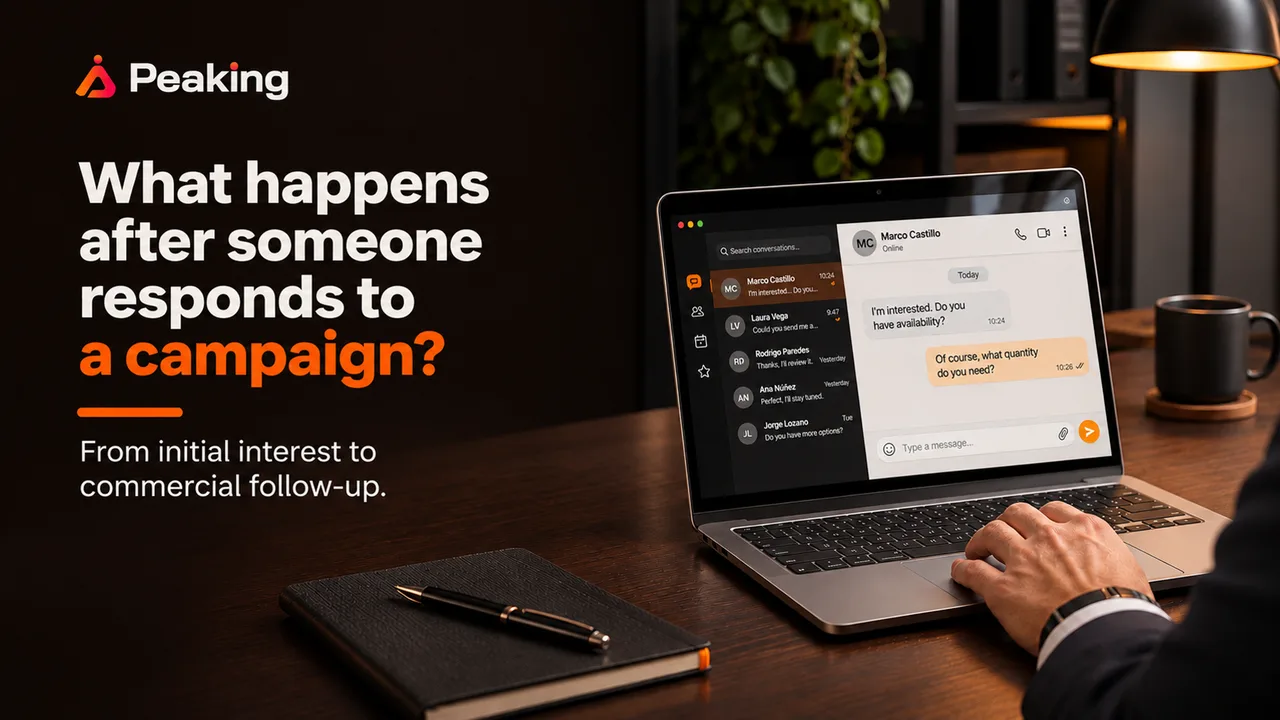
After someone responds to a campaign, the team should identify what that person needs, pick up the conversation's context, resolve their question with validated information and assign an owner with a defined next action. Without that process, the conversation can be left half-finished.
Your company sends a campaign. A customer who hasn't bought in months replies: "Do you still carry this product?" Now the team needs to identify what they're looking for, find the right information and help them move forward. If they have to wait, repeat their request or look for someone else, the conversation can be left half-finished.
Every response expresses a different need
Some want the price, others need to confirm availability and others are reviewing options for a future project. There will also be people who'd rather stop receiving messages, and that preference should be respected.
| If they reply | The next step |
|---|---|
| "I'm interested" | A question that helps you understand the need |
| They ask for a quote | Gather enough information to prepare a proposal |
| "Later on" | A follow-up agreed upon with the customer |
| They'd rather not receive messages | Respect that preference |
The customer expects the conversation to continue
Asking them to explain from scratch which ad they received adds unnecessary work. The same happens when the conversation goes to a rep who doesn't know the previous messages. To provide continuity, the team needs to know which campaign the contact came from, what they responded and what information they've already received. For an existing customer, their history helps too.
Responding quickly also means resolving
If they ask about availability, they need to know whether it's in stock. If they ask for a price, you may need to confirm the model, quantity or terms. If they want a technical recommendation, the application must be understood first. With "I need a belt for my equipment," the next step might be asking for the measurements and operating conditions.
Support is useful when it brings the customer closer to solving their need, with validated information and without promising terms the company hasn't confirmed.
Every opportunity needs an owner and a next action
The rep assumes marketing is following up. Marketing considers the response already passed to sales. Meanwhile, the customer waits.
To avoid this, every opportunity should have an owner and a next action: confirm a specification, send a technical sheet, prepare a quote or resume contact on the agreed date. Recording these steps lets follow-up continue even if the person handling the account changes.
Sending the quote doesn't end the process either
The customer may need an alternative, have questions about delivery or be waiting for internal approval. Instead of repeating "Have you reviewed the quote yet?", the team can ask whether the proposal meets what was requested or whether a term needs adjusting. If the customer names a decision date, agree on when to pick the conversation back up.
How can you tell if the campaign generated opportunities?
Delivered messages, reads and responses show the initial reaction. To evaluate the commercial result, ask:
- How many responses received attention?
- How many turned into quote requests?
- Which conversations are still pending?
- Which ended in a purchase?
A campaign can spark interest and still generate few sales if requests take too long or proposals go without follow-up. This information also helps adjust the message, choose the audience better and prepare the team.
From response to next step with Peaking
Peaking helps connect campaigns with sales support and follow-up. Depending on each operation's integrations and rules, the platform can support request management, make product information easier to access and speed up quote preparation.
When a customer responds, your company has a conversation to handle and a next step to define.
Frequently asked questions
What should you do when a customer responds to a campaign?
Identify what they need, pick up the campaign's context, resolve their question with validated information and assign an owner with a defined next action.
How can you tell if a campaign generated sales opportunities?
Beyond deliveries, reads and responses, review how many responses received attention, how many became quote requests, which are still pending and which ended in a purchase.
Who should follow up on campaign responses?
Each opportunity should have a defined owner and a recorded next action. That keeps sales and marketing from each assuming the other is handling it.
You've got this.
Book a demo and see what this article describes, on your own catalog.