
How do you find the right product in an incomplete list?
MIYA processed 2,123 customer list lines against its catalog, across 483 requests that arrived as lists.
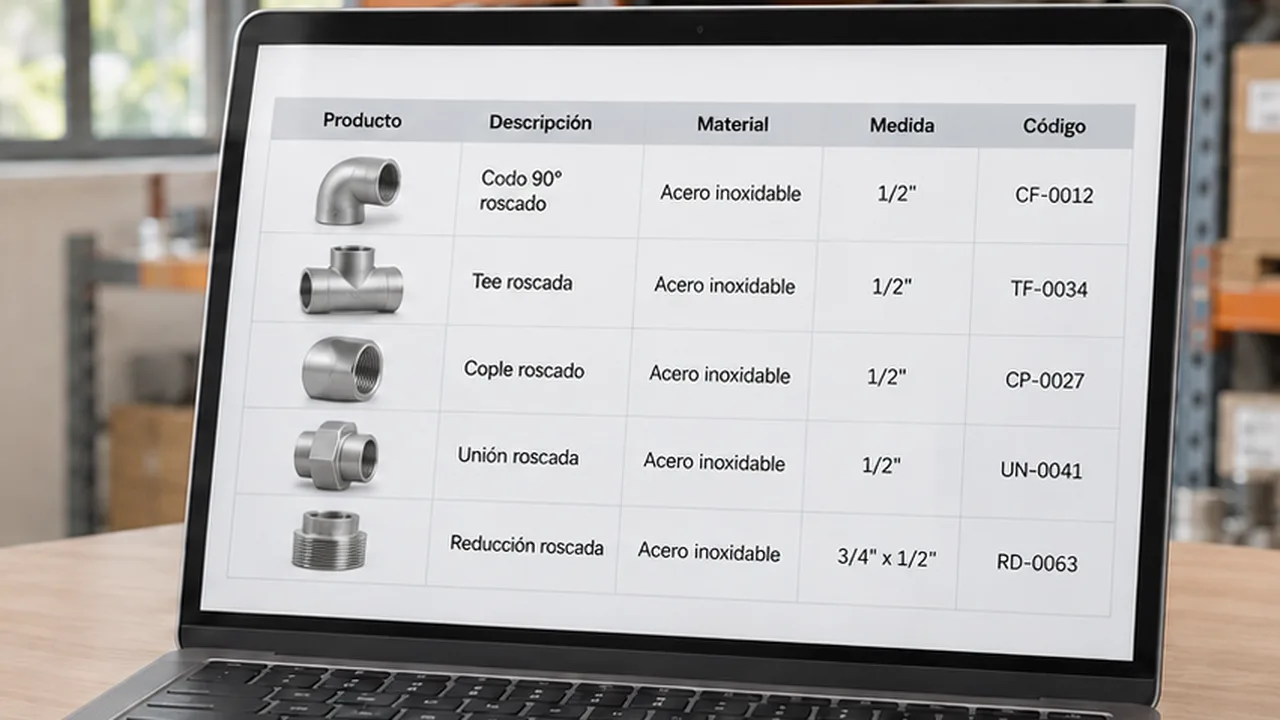
To find the right product in an incomplete list, interpret each line, relate it to the catalog, separate what's clear from what needs confirmation and ask only for what's missing. At MIYA, Peaking processed 2,123 customer list lines against the catalog, across 483 requests that arrived as lists.
A customer sends a product list and asks for a quote. Some lines include a reference; others just a name, a size or an abbreviated description. For the sales team, the first step is understanding what that person needs and how it relates to the catalog.
This is one of the challenges at MIYA, a fire protection and industrial supply company.
A list received still needs work
The customer knows their need but may express it differently: a name common in their operation, an internal code or another brand's reference. For the rep, those differences are questions to resolve. Does the description identify the product? Are there several similar options? Is a size, material or connection still unconfirmed?
When a request has several products, this review repeats. That's why handling a list well begins by organizing the information and recognizing what's clear and what needs confirmation.
The MIYA story: connecting the request to the catalog
At MIYA, working with lists brings together several tasks: receiving the request, interpreting its descriptions, locating references and reviewing matches. With Peaking, the list comes back processed against the catalog and the team has what it needs to continue.
customer list lines processed against the catalog
483 requests with listsproducts put in front of customers
MIYA storyquotes created in the ERP
MX$27.8 M quotedThe amount is in Mexican pesos. In addition, 511 product lookups ran against the catalog. Lines are product rows within the lists received. The 483 requests describe that processing activity; they aren't unique customers or closed sales.
How it was measured: production data audited as of September 23, 2026, with test traffic excluded before counting. MIYA operates with its team and Peaking in the same flow: this story measures work performed, not autonomous operation.
Finding a reference leads to better questions
Searching also helps identify what's still unknown. When a description points to several options, the next step can be asking for one specific characteristic rather than asking the customer to explain everything again.
With a product available in different materials, the rep can focus the conversation on the application. If the difference is a size or connection type, they can confirm that detail before quoting.
A person's involvement remains important when there are ambiguities, possible equivalents or technical requirements. When a request touches certification or a project, someone at MIYA decides, on work already prepared.
Documentation is part of the sale too
A technical sheet helps the customer confirm dimensions, materials and conditions of use, and lets someone else at their company evaluate the option before approving the purchase. In this business, when documentation goes out with the proposal, the buyer can move faster.
Delivering documentation doesn't by itself prove purchase intent. Its value depends on answering a need and helping define the next step.
From search to follow-up
After finding a reference or sharing a sheet, the rep needs to know what's still open: confirming a specification, reviewing an alternative or gathering what's needed to quote. With that context, follow-up gets more concrete.
MIYA's bottleneck was never quoting. It was everything that happens before.
Can your team move forward with the lists it receives, or does it have to rebuild each request before it can start quoting?
Full storyMIYA: the list comes in, the quote goes out.
Frequently asked questions
How do you quote a list with incomplete descriptions?
Interpret each line, relate it to the catalog, separate what's identified from what needs confirmation and ask only for the missing characteristic, such as a size, material or connection.
What are the processed lines in the MIYA story?
They're product rows within the lists customers send. MIYA processed 2,123 lines across 483 requests with lists. They aren't unique customers or closed sales.
Does Peaking operate autonomously at MIYA?
No. MIYA operates with its team and Peaking in the same flow. The story measures work performed, and decisions about certification or projects remain with a person at MIYA.
You've got this.
Book a demo and see what this article describes, on your own catalog.